

I remember when I first started my career almost 30 years ago, and I was probably at the lowest level in the organisation I was fortunate to be employed by. You might ask why I was fortunate which is a fair question, but at the time there was a recession, and for me getting a job in manufacturing was not easy, but I had my foot in the door, I was earning a wage, albeit not a great one, but it was a start.
The next challenge was to work out how I was going to progress. I was new to the industry and had plenty to learn, so there was no need to rush, but it was important that there was a plan.
Having a growth mindset meant that I was looking to develop, either through learning independently, or if I was lucky, by the company sponsoring/funding additional courses.
Again, if you are prepared to put the effort in, you will have moments of good luck, so despite the recession and the constant threat of job cuts, the company I was with agreed to sponsor me for my master’s degree.
For the following few years I was in a fortunate position, but once I graduated for the second time, it was time to focus on the career path.
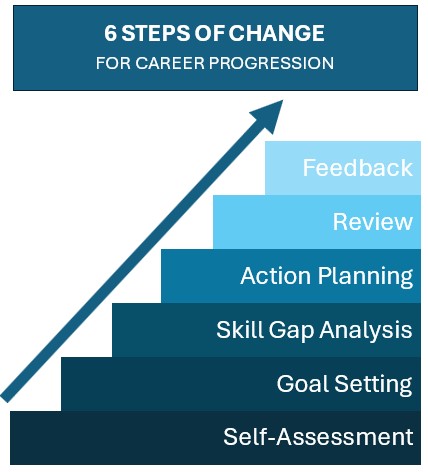
Below I have outlined the process which could be applied to anyone looking at career progression, and it is important not just to think about the here and now, but about your goals for the future.
Remember, Think BIG.
Here’s a more detailed breakdown of the 6 steps for career advancement:
1. Self-Assessment:
- Identify your current role and skills: What are your current responsibilities, strengths, and areas for improvement?
- Reflect on your values and interests: What motivates you? What kind of work environment do you thrive in?
- Define your career aspirations: Where do you see yourself in the future? What are your long-term career goals?
2. Goal Setting:
- Set SMART goals: Ensure your goals are Specific, Measurable, Achievable, Relevant, and Time-bound.
- Prioritize your goals: Focus on a few key objectives at a time.
- Break down goals into smaller steps: This makes them more manageable and provides a clear roadmap.
3. Skill Gap Analysis:
- Compare your skills with your desired role: Identify the skills you need to develop to bridge the gap.
- Consider both technical and soft skills: Look at both the hard skills needed for your target role and the interpersonal skills that are often important for career advancement.
- Identify resources for skill development: Explore training programs, workshops, or mentorship opportunities.
4. Action Planning:
- Create a timeline: Set deadlines for achieving your goals and track your progress.
- Identify potential obstacles: Anticipate challenges and develop strategies to overcome them.
- Seek support and guidance: Talk to your manager, mentors, or career advisors.
- Be flexible and adaptable: Your career plan should be a living document that you update as needed.
5. Review and Re-evaluation:
- Regularly assess your progress: Track your accomplishments and identify areas where you need to adjust your plan.
- Seek feedback: Talk to your manager, colleagues, or mentors about your progress and areas for improvement.
- Be open to new opportunities: Career paths can evolve, so be prepared to adapt your plan as needed.
6. Seek Feedback:
- Regularly request feedback from your manager: This helps you understand your strengths and weaknesses and identify areas for improvement.
- Be open to constructive criticism: Use feedback as an opportunity for growth and development.
- Seek feedback from various sources: Don’t rely solely on your manager’s feedback; consider input from colleagues and mentors as well.
By following these steps, you can create a solid career progression plan that will help you achieve your professional goals and advance your career.
I understand firsthand the challenges involved in pushing yourself for ensure the career has a purpose. At Phil Adderley Coaching, I help individuals not only achieve their goals but also overcome significant life obstacles through personalised coaching that addresses both mindfulness practices and employment challenges. My approach recognises that recovery requires holistic support, developing physical strength alongside mental resilience, rebuilding professional confidence, and establishing healthy routines that sustain long-term wellbeing.
I invite you to take that crucial first step toward positive change by booking a complimentary Zoom consultation. This initial meeting gives me the opportunity to understand your unique needs, challenges, and aspirations, allowing us to create a tailored coaching plan that addresses your specific circumstances. Whether you’re seeking to improve your performance, enhance your mindfulness practice, or overcome employment hurdles, I’m committed to supporting you throughout your journey. Send an email to phil.adderley.coaching@gmail.com today to schedule your free session and discover how we can work together toward meaningful transformation and lasting success.


 Phil Adderley Coaching
Leave a comment